Whispering Webs – Free Spider Web Socks Knitting Pattern
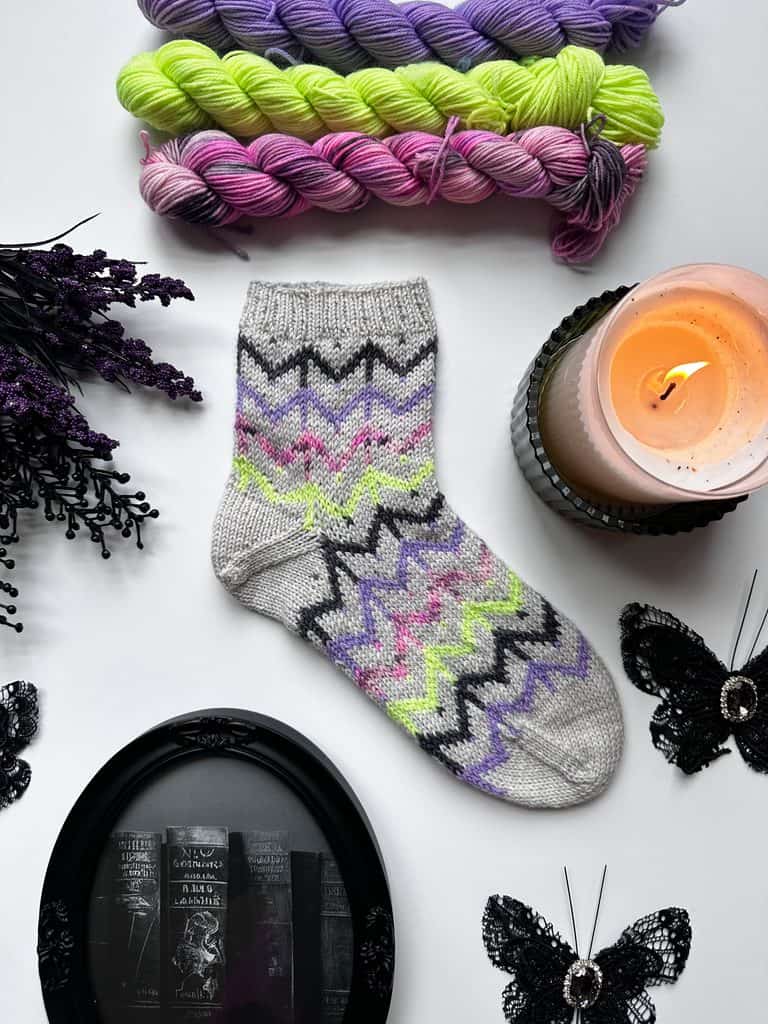
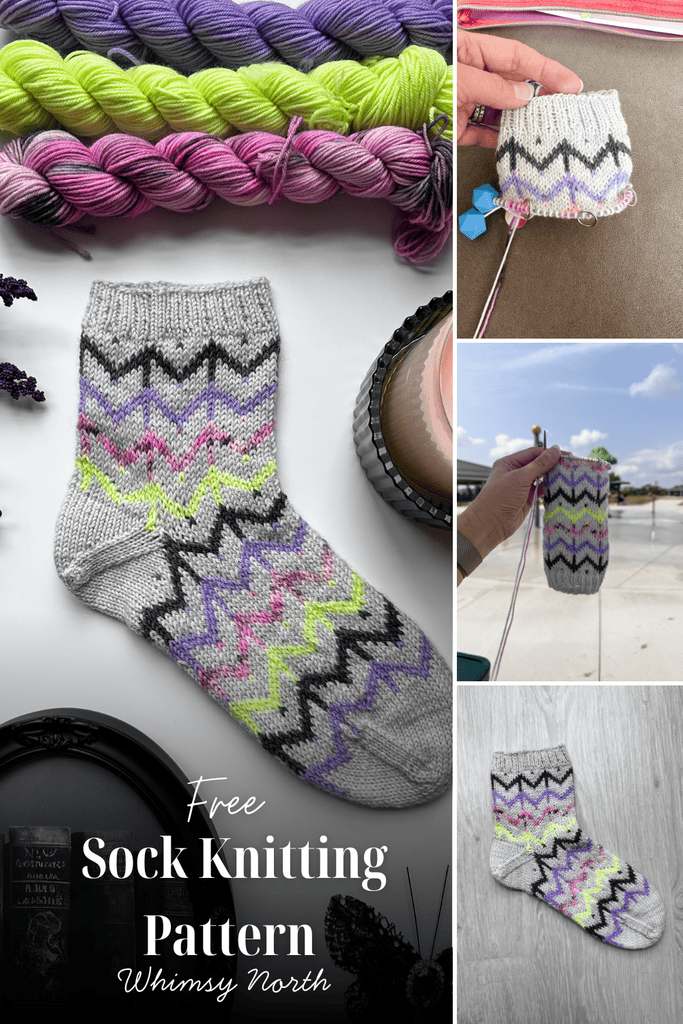
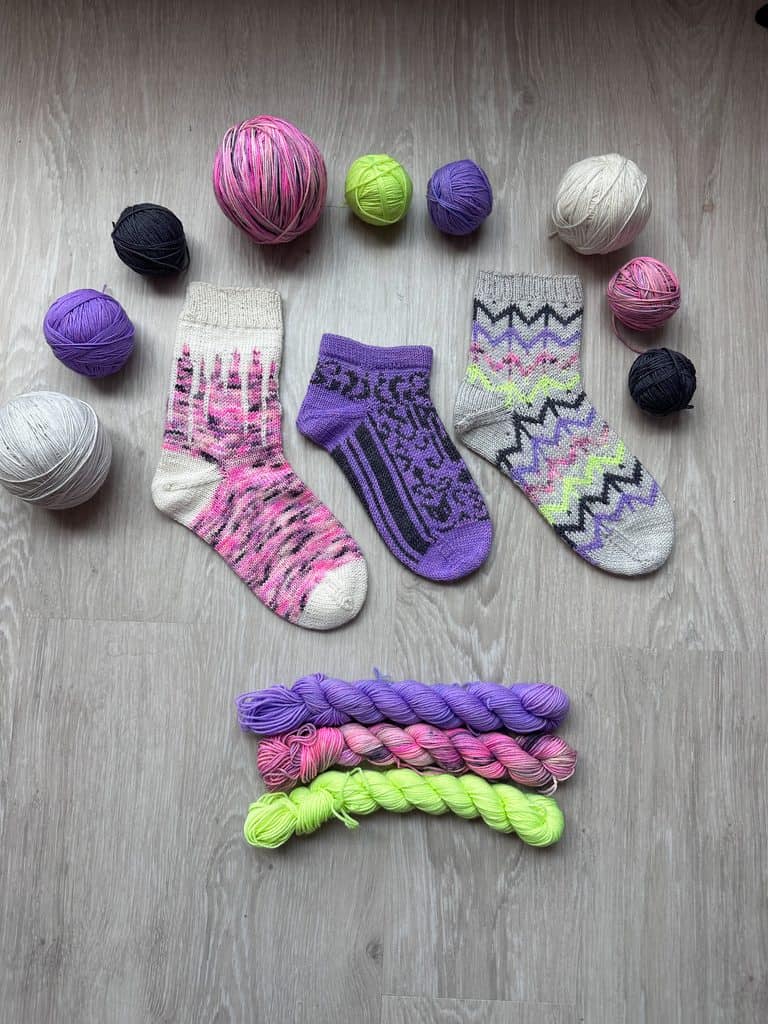
Knit a little Halloween magic with the Whispering Webs Socks! This free spider web socks knitting pattern features an all-over stranded colorwork web motif worked in four contrasting colors against a simple background. Knit from the cuff down with an afterthought heel, these colorful Halloween socks are a fun way to use mini skeins and leftover fingering weight yarn. Scroll down for the full free knitting pattern or purchase the ad-free PDF here.
This post may contain affiliate links. In the event of a sale, I get rewarded a small commission, at no extra cost for you. These funds help me keep my blog up and running to provide you with great content and free patterns so thank you!
Free Spider Web Socks Knitting Pattern
There is something about spider webs that feels equal parts spooky and beautiful, which made them the perfect inspiration for the Whispering Webs Socks.
I originally designed these socks as part of my Not So Scary collection with Summer Camp Fibers, inspired by the playful, slightly spooky feeling of a certain famous Haunted Mansion located at the Most Magical Place on Earth. Rather than creating a traditional black-and-white Halloween sock, I wanted the webs themselves to be colorful.
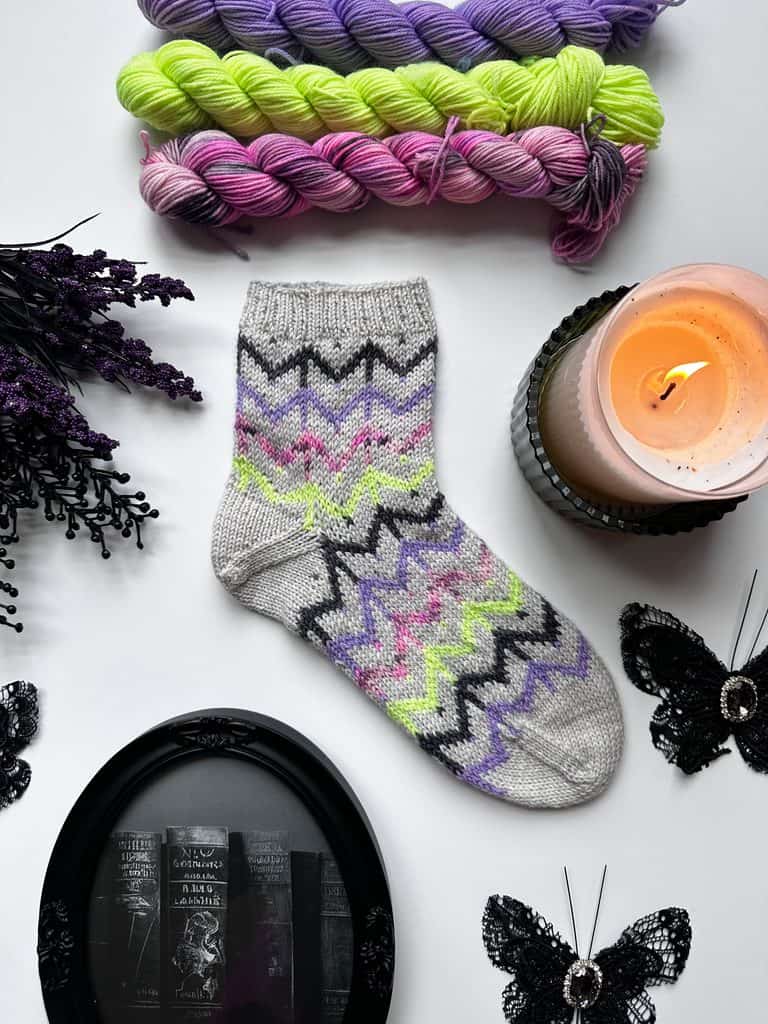
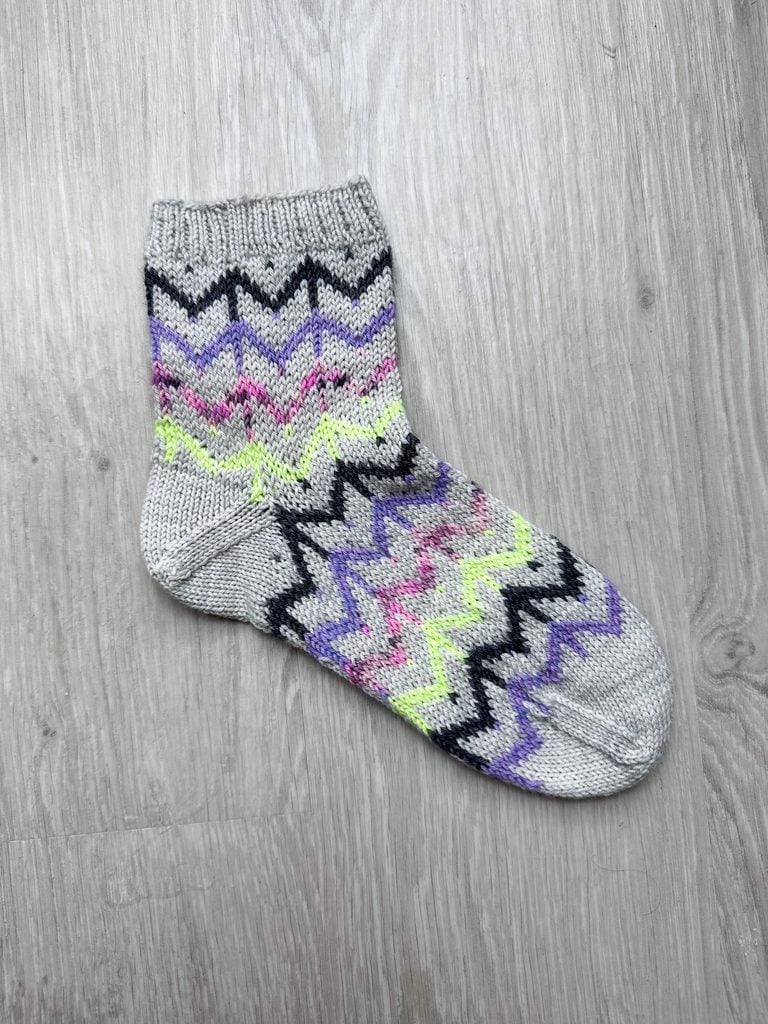
The result is an all-over spider web motif that winds around the leg and foot, with four contrasting colors appearing one at a time against a single background color.
My original pair mixes black, purple, pink and a bright pop of lime green against a light neutral grey background, but that’s only one possibility. Change the colors and these socks can go from spooky Halloween knitting to something completely different. You can choose to use as many or as little colors for the webs as you like.
A Colorwork Sock Pattern That Looks More Complicated Than It Is
With four contrasting colors winding their way through these socks, the Whispering Webs Socks may look like a complicated colorwork project—but they’re much simpler to knit than they appear!
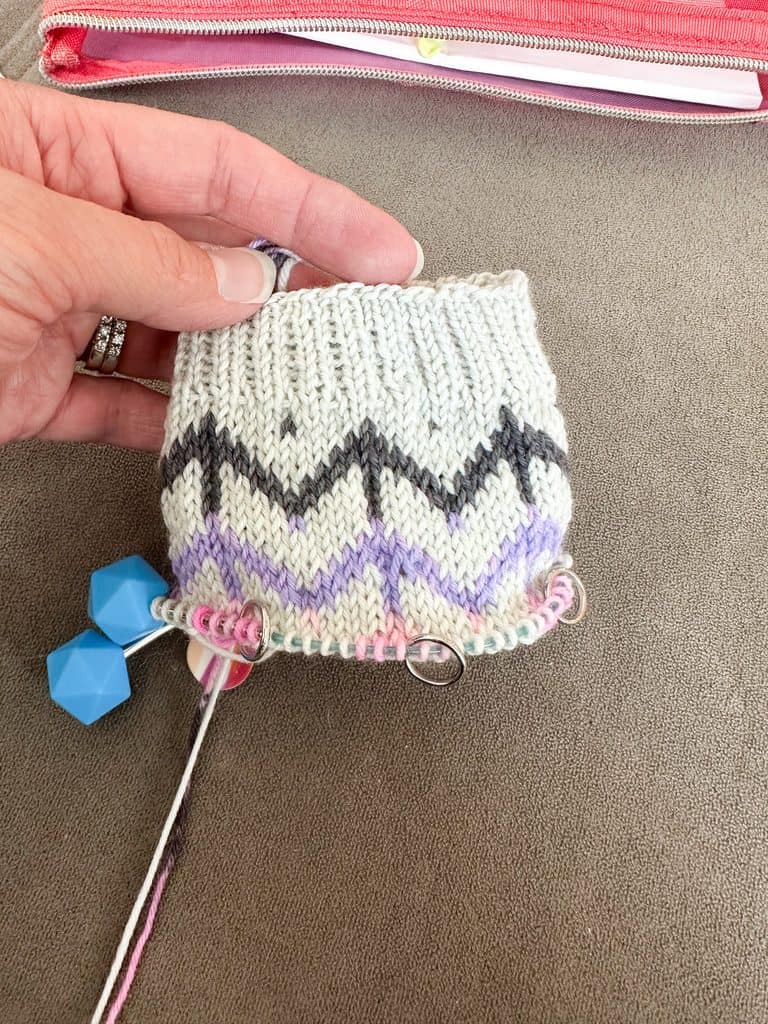
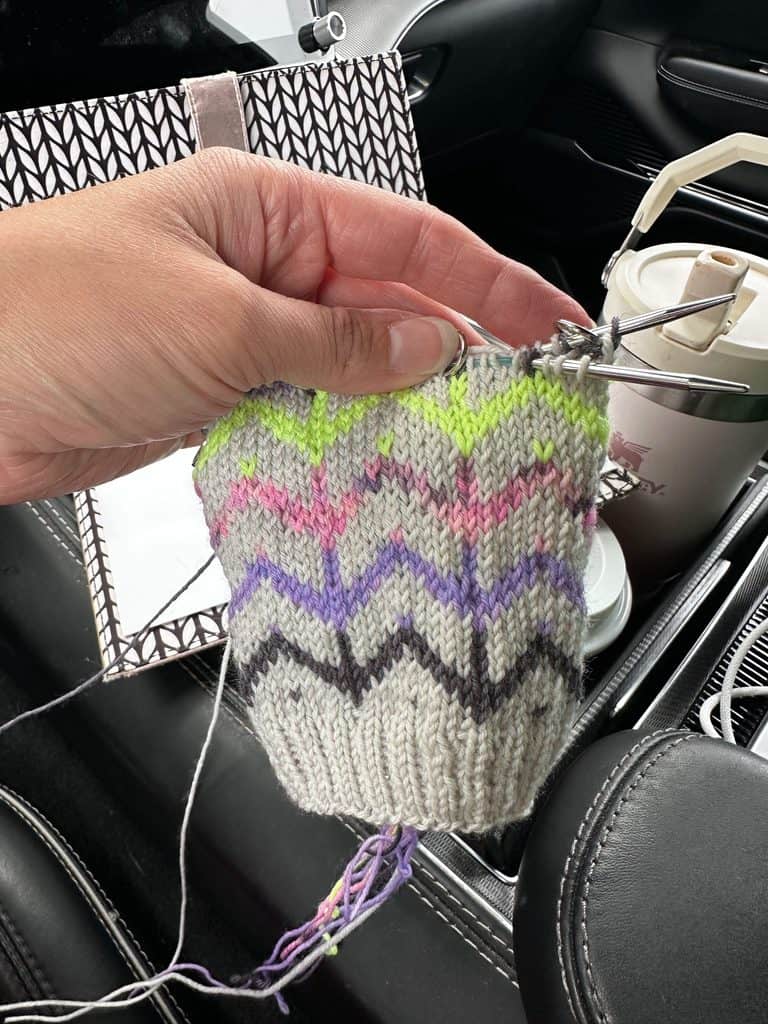
Although the finished socks feature four different contrasting colors, you’ll only work with two colors at a time: your main color and one contrasting color. Each spider web motif is worked with a single contrast color, and when you finish the repeat, you simply switch to the next color in your sequence.
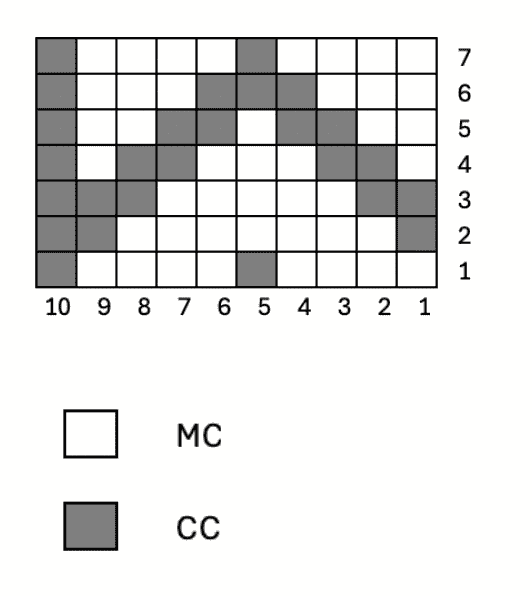
The spider web chart is also just seven rounds long, making the pattern easy to settle into once you get the hang of it. As you knit, you’ll repeat the same web motif while rotating through your contrasting colors to create the colorful all-over design. Whispering Webs Sock Pattern
If you’re newer to stranded colorwork, this is a fun pattern for practicing the technique without juggling several strands of yarn at once. Just remember to keep your floats relaxed—especially when knitting socks, where you want enough stretch for the finished sock to comfortably fit over your heel.
And while I used four different contrasting colors for my Whispering Webs Socks, you definitely don’t have to! Use four coordinating mini skeins like I did, dig through your leftover sock yarn for a scrappy version, or knit every web in the same contrasting color for a classic two-color look. The simple repeating motif gives you plenty of room to make these socks your own.
Pin to Pinterest
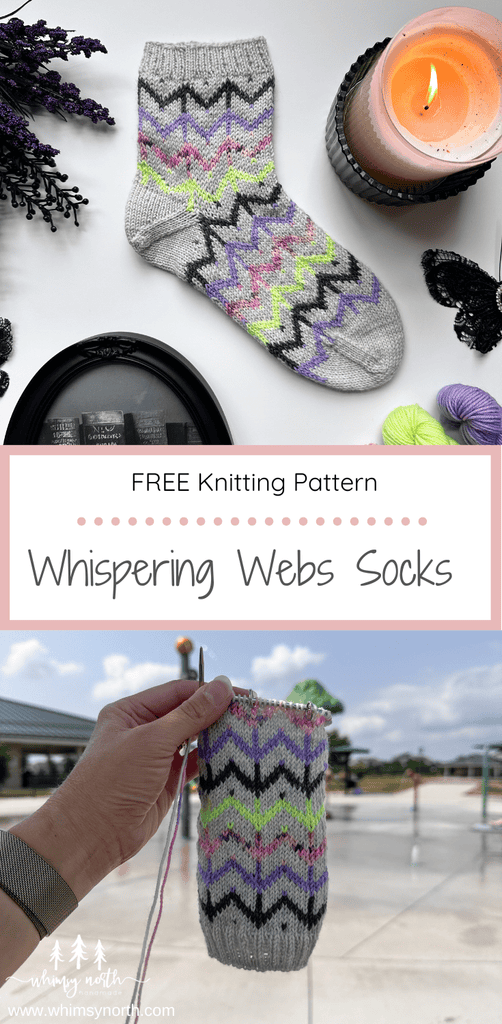
Save the Whispering Webs Socks free knitting pattern to Pinterest so you can find it the next time you want to knit a spooky yet elegant pair of socks.
Best Yarn for Knitting Colorwork Socks
When choosing yarn for colorwork socks, I recommend using a fingering weight sock yarn with good stitch definition so your colorwork motif really stands out. A wool blend with a little nylon is a great choice for socks because you get the softness and warmth of wool with added durability for everyday wear.
For my Whispering Webs Socks, I used Summer Camp Fibers Marshmallow Sock, a fingering weight yarn made from 75% superwash merino wool and 25% nylon. The pattern uses one main color for the background of the sock along with four contrasting colors to create the spider web design.
When picking your colors, contrast is key. You want enough difference between your main color and contrasting colors for the spider webs to show clearly. I used a light neutral gray for my main color and a mix of darker and brighter mini skeins for the webs, but you could just as easily reverse that and use a dark background with lighter webs.
Solid and tonal yarns are especially nice for stranded colorwork because they allow the pattern to remain the star of the show. If you want to use speckled or variegated yarn, I would pair it with a more solid main color and make sure there is still enough contrast between the two for the web motif to be visible.
And don’t feel like you need to purchase five full skeins of sock yarn for this pattern! While you’ll need a full skein for your main color, the contrasting colors use much smaller amounts—making Whispering Webs a perfect opportunity to pull out your mini skeins and leftover sock yarn. We’ll talk more about that next!
Use Your Mini Skeins for These Spider Web Socks
If you have a collection of fingering weight mini skeins waiting for the perfect project, the Whispering Webs Socks are a fun way to put them to use! The pattern uses one main color along with four contrasting colors, with each mini skein creating a different section of colorful spider webs.
And because you only need approximately 25–35 yards of each contrasting color, depending on the size you’re knitting, this is a great mini skein knitting pattern for using those smaller amounts of yarn that aren’t quite enough for a full project.
Don’t have four mini skeins? No problem! Dig through your leftover fingering weight yarn and create a completely scrappy pair of socks instead. You can use four coordinating colors, create a fade, mix together your favorite leftover sock yarns, or even use the same contrasting color for every web. As long as there is enough contrast between your web color and main color, there really are no rules!
I love projects like this because they give those little bits of beautiful yarn left over from other projects a new purpose. And if you’re looking for even more ways to use your mini skeins and sock yarn scraps, check out some of my other mini skein knitting patterns here.
How to Knit Socks with an Afterthought Heel
The Whispering Webs Socks are knit from the cuff down and use an afterthought heel, which is one of my favorite heel constructions—especially for colorwork socks! Instead of stopping to shape the heel while you knit the leg and foot, you knit a strand of waste yarn across the heel stitches to hold their place and then continue knitting the rest of your sock.
When you’re ready to add the heel, you’ll pick up the stitches above and below the waste yarn, carefully remove the waste yarn, and work the heel in the round. The heel is shaped with simple decreases and then finished by grafting the remaining stitches together with Kitchener stitch.
One little trick I like to use is to knit my afterthought heel before I finish the foot and toe. For the Whispering Webs Socks, I work four additional spider web motifs after placing my waste yarn and then go back and knit the heel. Once the heel is finished, I can try on my sock and continue knitting the foot until it’s exactly the length I want.
I especially love an afterthought heel for these socks because it allows the colorful spider web pattern to continue uninterrupted down the leg and onto the foot. The finished heel is worked entirely in the main color, giving your eye a little break from the colorwork while letting those colorful webs remain the star of the show.
What Skill Level are the Whispering Webs Socks?
I would consider the Whispering Webs Socks an advanced beginner to intermediate sock knitting pattern. They’re a great choice if you’ve knit a basic pair of socks before and are ready to add stranded colorwork to your sock-knitting skills.
While the finished spider web design looks intricate, the colorwork itself is surprisingly approachable. You’ll only work with two colors at a time, and the same seven-round web chart is repeated throughout the leg and foot. Once you’ve worked through the chart a few times, it develops a nice rhythm.
You’ll want to be comfortable knitting in the round, reading a colorwork chart, working basic increases and decreases, and knitting with two colors. The pattern also uses an afterthought heel and Kitchener stitch to graft the heel and toe closed.
If stranded colorwork is still fairly new to you, just pay extra attention to keeping your floats nice and relaxed. Socks need enough stretch to comfortably fit over your heel, so you don’t want your colorwork to become too tight.
Most importantly, don’t let all those colorful spider webs fool you into thinking you’re juggling four or five colors at once! The repeating motif and one-contrast-color-at-a-time construction make these socks a fun next step if you’re ready to move beyond a basic sock pattern.
Whispering Webs Socks Pattern Details
Here’s what you can expect from the Whispering Webs Socks:
Skill Level: Advanced Beginner/Intermediate
Construction: Cuff-down socks knit in the round
Techniques: Stranded colorwork, reading a chart, afterthought heel, decreases, Kitchener stitch
Yarn Weight: Fingering / sock weight
Colors: One main color + four contrasting colors
Sizes: Small (Medium, Large, Extra Large)
Finished Circumference: 7 (8, 9, 10)”
Gauge: 40 sts × 28 rounds = 4″ in stranded colorwork, blocked
Needles: US 2 / 2.75mm gauge needle + US 1 / 2.25mm smaller needle
More Halloween Knitting Patterns
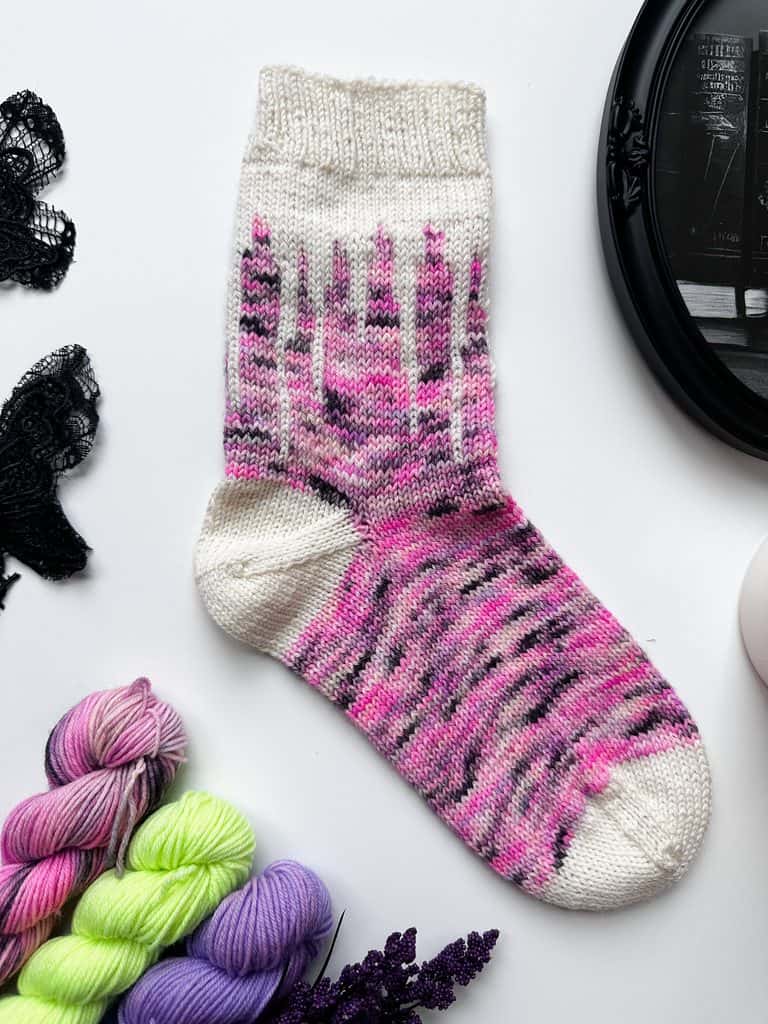
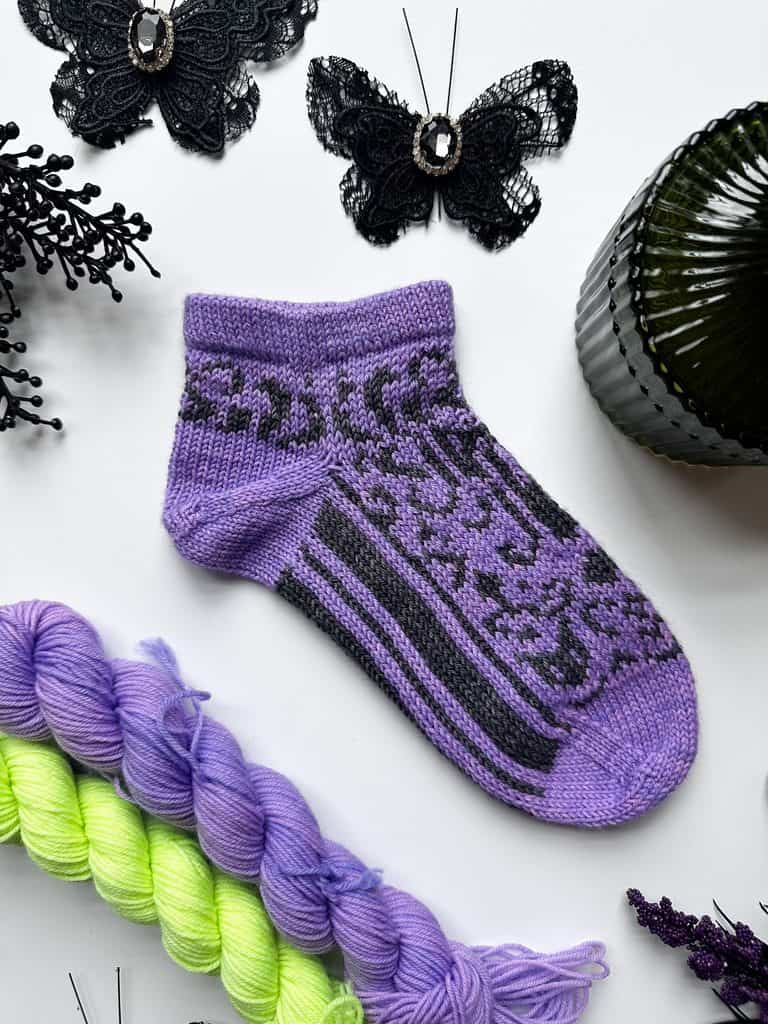
Looking for even more spooky knitting to add to your fall project list? The Whispering Webs Socks are part of my Not So Scary collection, a trio of Halloween sock knitting patterns filled with playful colorwork and just the right amount of spooky!
Along with the colorful spider webs of Whispering Webs, the collection includes Spirits Aglow, featuring glowing candle-inspired colorwork, and Happy Haunts, a playful shortie sock design with spooky details. Each pattern has its own look, so you can choose your favorite or knit all three for a little extra Halloween fun.
And if Halloween knitting is your favorite kind of knitting, be sure to explore more of my Halloween knitting patterns for even more spooky-season projects to cast on.
Free Halloween Sock Knitting Pattern
You can find the full Whispering Webs Knitting Pattern below or purchase the ad-free PDF here.
Ready to cast on? Grab your fingering weight yarn and colorful accents and get ready for some fun with color!

More Free Sock Knitting Patterns You’ll Love
- Shimmer Socks – Free Easy Colorwork Socks Knitting Pattern
- Saguaro Blossom Socks – Free Cactus Socks Knitting Pattern
Whispering Webs Knitting Pattern
Supplies:
yarn
Fingering weight yarn in the following yardages…
MC: 222 (254, 286, 318) yds / 203 (233, 262, 291) m
CC1: 25 (28, 32, 35) yds / 23 (26, 30, 32) m
CC2: 25 (28, 32, 35) yds / 23 (26, 30, 32) m
CC3: 25 (28, 32, 35) yds / 23 (26, 30, 32) m
CC4: 25 (28, 32, 35) yds / 23 (26, 30, 32) m
suggested Yarn
- Summer Camp Fibers – Camp Sock (Sample Yarn)
- Madeline Tosh Sock – Luxury Sock Yarn with fun bright colors
- Knit Picks Stroll – Favorite Value Yarn for socks
needles
- Gauge Needle: Size US 2 (2.75 mm) — DPNs, 36″ circular for magic loop or 10″ circular needle, or size necessary to obtain gauge. (My favorite sock knitting needles are these! I also love these 10″ circular needles)
- Small Needle: Size US 1 (2.25 mm) DPNs, 36″ circular for magic loop or 10″ circular needle— one size smaller than Gauge Needle.
notions
- Stitch Marker
- Tapestry Needle
- Scissors
- Waste Yarn
- Favorite all around knitting tool I keep in every project bag – The Knit Kit
gauge
- 40 sts × 28 rnds = 4″/10 cm in stranded colorwork, blocked.
sizes
- SIZES: Small (7″/17.75 cm), Medium (8″/20.25 cm), Large (9″/22.75 cm), Extra Large (10″/25.5 cm)
- [Sample is shown in size small.]
Whispering Webs Pattern Notes
Knitting Colorful Webs
The web motif is worked continuously throughout the leg and foot using MC and one contrasting color at a time. Begin with CC1 and change to the next contrasting color with each complete chart repeat, working CC1, CC2, CC3, and CC4 in sequence. Continue repeating this color sequence as established throughout the sock.
Knitting Abbreviations for this Pattern
BOR – Beginning of round
CC – Contrasting Color
CO – Cast on
DPNs – Double Pointed Needles
k – Knit
k2tog – Knit the next two stitches together (1 st decrease)
MC – Main Color
M1L – Make one left (1 st increase)
p – Purl
PM– Place Marker
Rep – Repeat
Rnd – Round
ssk – Slip, slip, knit (1 st decrease)
sl – Slip
st(s) – Stitch(es)
Whispering Webs Socks Pattern Directions
Cuff
With smaller needles and MC, CO 60 (69, 78, 90) sts and join in the round, being careful not to twist your stitches.
Round 1: *K2, p1; rep from * to BOR. Continue in 2×1 ribbing until cuff measures 1″/2.5cm.
Next Round M + L only (S + XL move onto leg)
M: *K2, p1; rep from * to last three sts, k1, m1L, k1, p1. [1 st increased, 70 sts total]
L: *K2, p1; rep from * to last six sts, *k1, m1L, k1, p1; rep from * to BOR. [2 sts increased, 80 sts total]
Leg
Change to Gauge Needle. Knit 1 rnd with MC.
Next, work Rounds 1–7 of the Web Chart (below) using CC1. Repeat Rounds 1–7 three more times, using the next CC for each repeat. Continue to the Afterthought Heel Placement instructions after the 4th web motif is complete.
chart
Afterthought Heel Placement
Place the waste yarn for the afterthought heel as follows. With MC, knit across the first 30 (35, 40, 45) sts of the round. Using waste yarn, knit across the remaining 30 (35, 40, 45) sts. Next, slip the waste yarn stitches from your right needle back onto your left needle. Rejoin MC and knit across those stitches again, replacing the waste yarn with your working yarn. The waste yarn is now in place for your afterthought heel. Continue working the Web Chart where you left off.
foot
Continue knitting from the chart alternating between CC1, CC2, CC3, and CC4 for each different web motif until your foot reaches your desired length. See note above for fit.
Note: Per the notes section, I like to knit my heel before I finish the foot and toe so that I can get the best custom fit. To do this, I knit 4 additional web motifs then I knit my heel. Once my heel is finished I knit the rest of the chart until my desired length.
Toe
Once the foot reaches your desired length, change to the smaller needles and continue with MC for the toe. See schematic on page 4 for the Craft Yarn Council standard foot lengths measured from the back of your heel to the end of the toe. You can also measure from your waste line, or if you are trying on your sock, the waste yarn line should line up with the center of your heel. I start my toe decreases when the foot of my sock reaches the end of my pinky toe. See notes section for diagram.
Next Round M + XL only
M: K1, ssk, k32, k1, ssk, k to BOR. [2 sts decreased, 68 sts total]
XL: K1, ssk, k42, k1, ssk, k to BOR. [2 sts decreased, 88 sts total]
Round 1: K1, ssk, k 24 (28, 34, 38) sts, k2tog, k1, pm, k1, ssk, k 24 (28, 34, 38) sts, k2tog, k1.
Round 2: K
Round 3: K1, ssk, k to 3 sts before marker, k2tog, k1, slip marker, k1, ssk, k to 3 sts before BOR, k2tog, k1.
Repeat rows 2 and 3 until 24 (28, 32, 36) sts remain. Use Kitchener Stitch to graft toe sts closed.
heel
Work the heel using the smaller needles and MC. To begin you will first need to get your heel stitches back on your needles. You currently have half of your stitches knit onto a strand of waste yarn. Pick up those stitches above and below your waste yarn, plus an additional stitch at the end of each side, giving you 64 (74, 84, 94) total sts on your needles.
Note: Make sure your sock is right side out when picking up sts. Start by picking up the stitch just before and below the beginning of your waste yarn. Then pick up the right leg of each stitch across bottom side of the waste yarn ending with the stitch just below and after where the waste yarn ends. Now you have the bottom half of your heel stitches picked up. Repeat these steps for the stitches above your waste yarn. Once all stitches are picked up you can remove your waste yarn. I like to use the magic loop method for my heels and find moving my stitches onto the cord makes removing the stitches easier.
Next Round M + XL only
M: K1, ssk, k34, k1, ssk, k to BOR. [2 sts decreased, 72 sts total]
XL: K1, ssk, k44, k1, ssk, k to BOR. [2 sts decreased, 92 sts total]
Round 1: K
Round 2: K1, ssk, k 26 (30, 36, 40) sts, k2tog, k1, pm, k1, ssk, k 26 (30, 36, 40) sts, k2tog, k1.
Round 3: K
Round 4: K1, ssk, k to 3 sts before marker, k2tog, k1, slip marker, k1, ssk, k to 3 sts before BOR, k2tog, k1.
Repeat rows 3 and 4 until 24 (28, 32, 36) sts remain.
Finishing
Use Kitchener Stitch to graft heel sts closed. Weave in ends and block! These are my favorite sock blockers!
More Free Colorwork Knitting Projects to Try
- Winter Carnival Hat – Free Colorwork Knitting Pattern for Beginners
- Kindra Cowl – Free Colorwork Cowl Knitting Pattern
- Basalt Stone Cowl – Free Worsted Weight Mosaic Cowl Knitting Pattern